Royal Values
 James Lord-McIntosh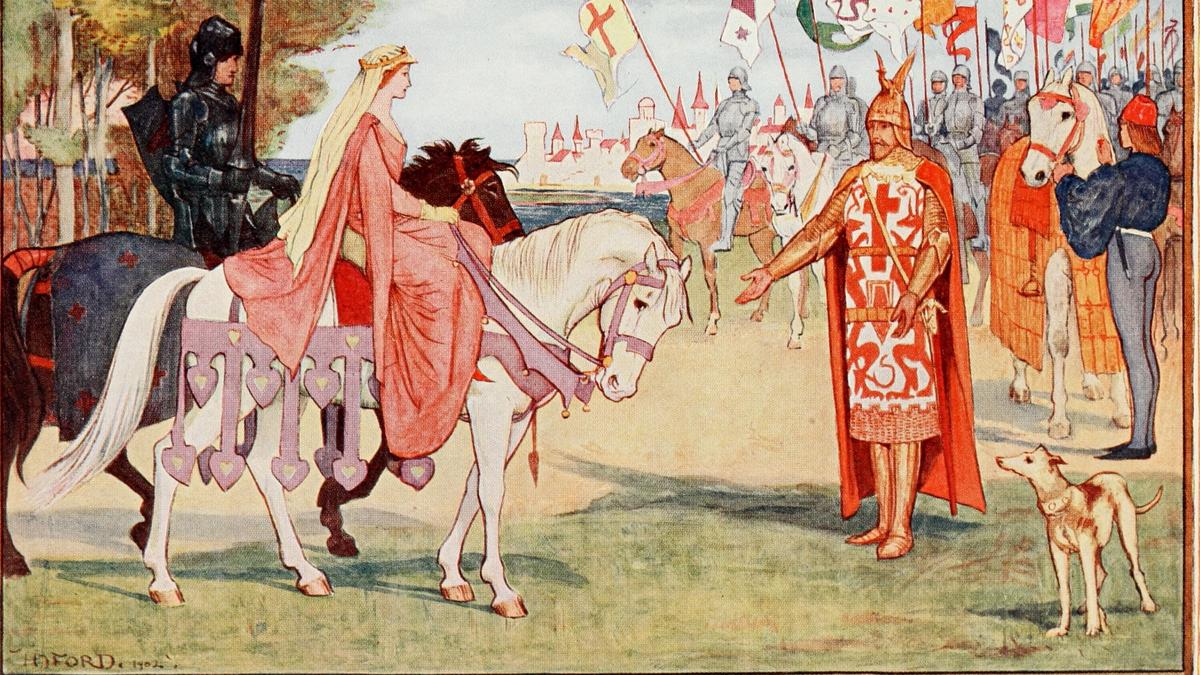
You should behave like a royal in business. Well, maybe not quite, but there's certainly some things we can learn from them. King Arthur remains the most enduring example of values driven leadership, he stood for equality and justice and is still being reinterpreted into relevance today. In terms of real royals, the impact of strong values driven leadership can be seen best in some of the counter examples, King John was brutal, arbitrary and unfair in his rule. I think we've all had bosses like that and the Barons did what anyone would do in that situatio; they unionised. Well, they created the Magna Carta anyway, which included protection from illegal imprisonment and unfair taxation, bringing equality and justice, at least if you were a noble. It was such an important move that it was reissued and added to many times over the years and the Kings who tried to rescind it faced rebellion and deposition, which good old King John did almost immediately.
Bringing it a bit closer to home we of course have the legendary Robert the Bruce, whose emphasis on freedom (I won't do it or I'll be deported) managed to lead a much smaller, poorer and divided country to an unlikely victory over a much more powerful foe. The Declaration of Arbroath is something akin to Scotland's Magna Carta and makes the point well: "It is in truth not for glory, nor riches, nor honours that we are fighting, but for freedom alone, which no honest man gives up but with life itself."
So what's the point? The point is that when you're in a tough spot it requires a strong set of values that your team will rally behind. I mean, the British Monarchy are still around today when many others have been overthrown for their excess. In terms of companies, the benefits are clear. Studies have shown that companies that properly embed their values are more engaging for employees, trustworthy for customers, and successful in the market.
In terms of choosing values, you need to find specific ones that are actionable and useful - they should guide decision making within the organisation, if you believe in empowerment then that makes some choices about management very clear, for example. More generic ones like "respect people" aren't particularly inspiring, you would hope are obvious and if you have to remind people to do it they definitely aren't and won't.
Valve, for example, values innovator autonomy above almost everything else, hence no managers and a flat structure. 37signals values calm over speed so prioritises async communication over real-time chat.
Considering how you use your values is critical as well, embedding them into your processes is key to having them become reality, particularly hiring practices to ensure that the people you hire are aligned with your values, without that the benefit is entirely lost, but also make a practice of considering them when designing any new process.
It is worth remembering that values are not what's written down but what your whole organisation actually does, so review your values with some regularity, at least a couple of times a year, bearing in mind the reality of your organisation. When they change, or if the reality of your organisation differs from the values you want to keep, review your values and processes and see how they can be adjusted to reinforce and incentivise the right behaviour. Values should be somewhat aspirational, but only in such a way that people believe they can actually be achieved.
References:
https://www.nrscotland.gov.uk/files/research/NRS_DoA_English_booklet_700_Spreads_WEB.pdf
https://www.britannica.com/topic/Magna-Carta/Reissues-of-1216-1217-and-1225
https://courses.lumenlearning.com/suny-worldhistory/chapter/the-magna-carta/
Building a Values-Driven Organization By Richard Barrett (2006)
https://mitsloan.mit.edu/ideas-made-to-matter/how-and-why-to-run-a-values-based-business
https://ceoworld.biz/2021/07/09/why-values-driven-organizations-improve-your-bottom-line/
https://www.slideshare.net/slideshow/valve-employee-handbook/12727512